RESOURCE COLLECTION
Compliance automation: everything you need to know
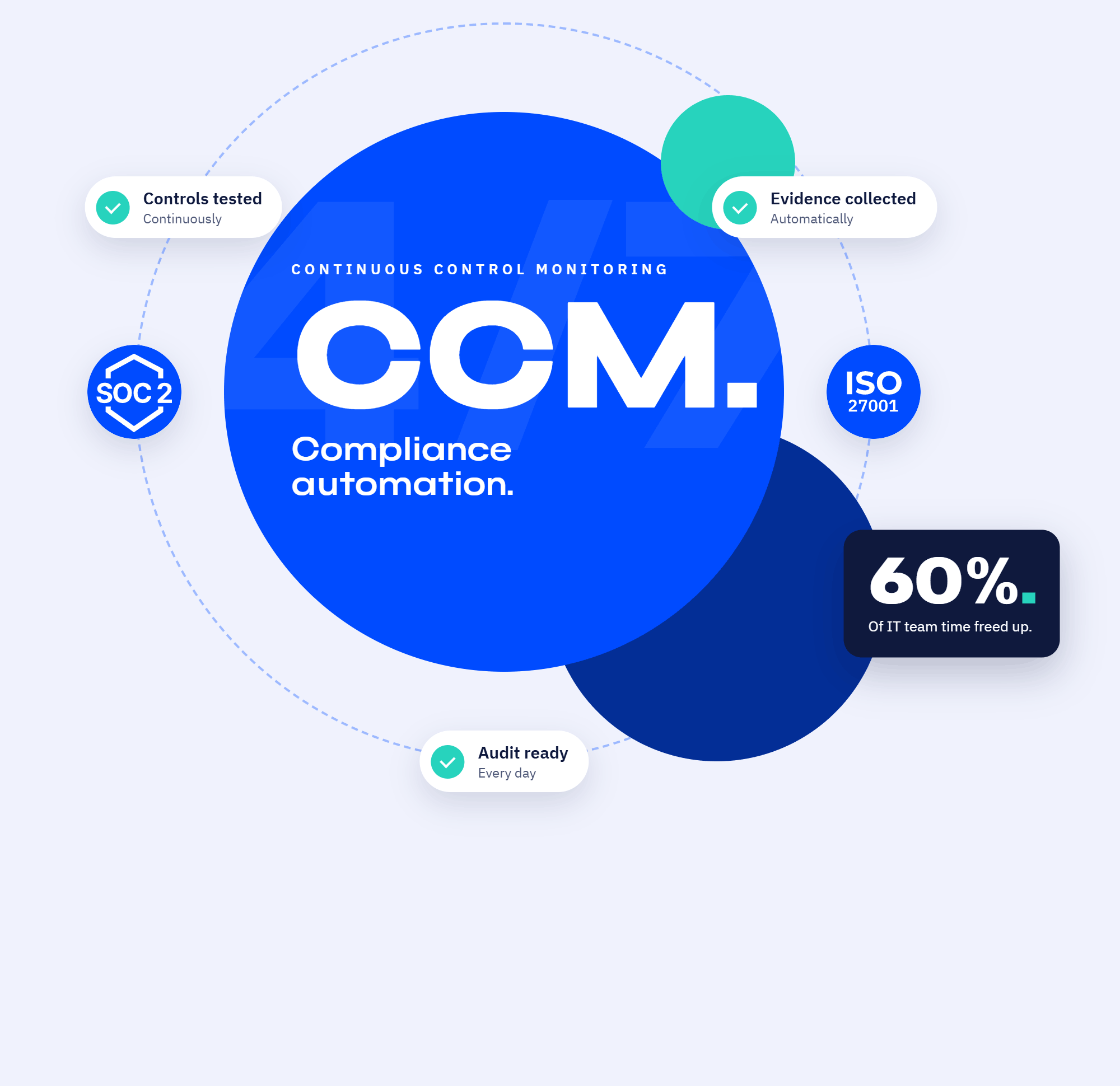
Compliance automation uses software to collect evidence, test controls and report on compliance without the manual chasing, spreadsheets and screenshots. Its strongest form is continuous controls monitoring (CCM), which checks controls every day rather than once a year, so gaps surface as they appear and evidence reflects how controls really perform.
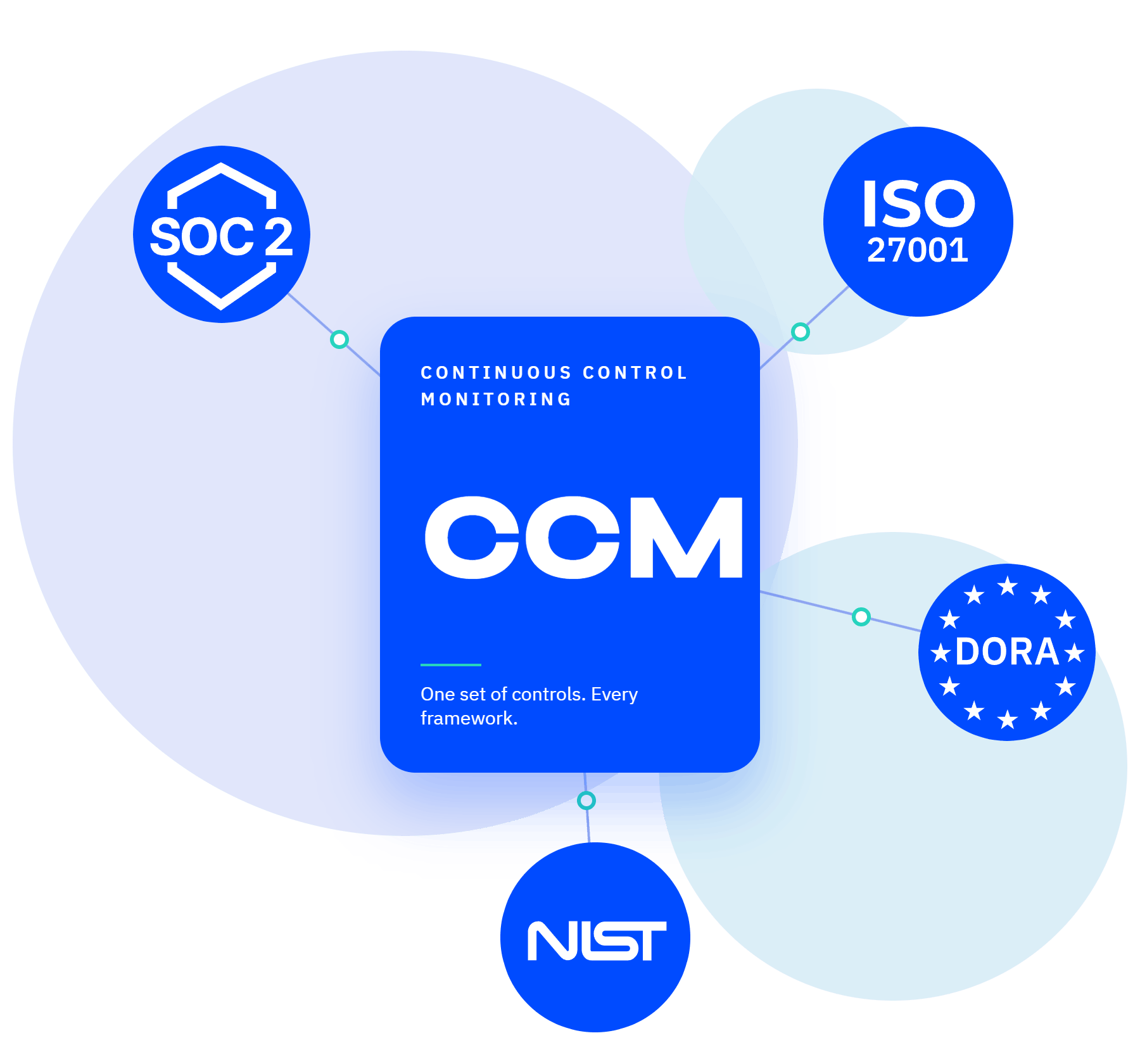
It applies to any organisation that has to prove its controls work, whether for ISO 27001, SOC 2, DORA, NIS 2 or PCI DSS. Learn more about the difference between compliance and continuous assurance.
Want to see the platform rather than the theory? Visit the Continuous Controls Monitoring software page
Automate compliance with a more connected approach to GRC
Many teams automate one task, such as evidence collection, and still test controls by hand. The result is the same gap as before: a control that passes in March can fail by June and go unnoticed until the October audit. Compliance automation closes that gap when evidence, control testing and reporting run continuously and connect to each other.
For most teams, the challenge is not accepting that automation helps. It is deciding which controls to automate first, connecting the systems that hold the evidence, mapping one set of tests to several frameworks, and keeping results tied to risk, audit and remediation instead of sitting in a separate tool. That gets harder when compliance, monitoring and audit each live in a different platform.
This collection gives you practical guidance on compliance automation, including how it works, how continuous controls monitoring and AI are changing control testing, how to compare platforms and alternatives, and how it applies to frameworks and GRC disciplines such as SOC 2, DORA, internal audit and third-party risk.
SureCloud combines native CCM with enterprise GRC in one platform. By centralising controls, evidence, assessments, policies and remediation, teams can cut manual effort, see control health in real time, and move from point-in-time audits to continuous assurance.
Explore compliance automation articles
Fundamentals: what it is and how it works
Continuous controls monitoring (CCM)