Compliance Management
 Risk Management
 Third Party Risk Management
 Data Privacy Management
 Internal Auditing
 Business Continuity Management
 Continuous Control Monitoring (CCM)
 Trust Center
 AI Governance
- Compliance Management
- SOC 2
- 4th Dec 2025
- 1 min read
Why SOC 2 Needs a New Approach in 2026

- Written by
In Short...
TLDR: 4 Key Takeaways
-
SOC 2 now demands a continuous approach, as modern cloud environments, AI-driven workflows and distributed teams change too quickly for annual evidence collection to remain reliable.
-
Manual processes can no longer keep up, with configuration drift, identity changes and fast-moving infrastructures making screenshot-based evidence outdated almost immediately.
-
Automation strengthens Type 2 audits, providing consistent, timestamped, system-of-record evidence and early detection of issues long before auditors review control performance.
-
Modern compliance programmes prioritise visibility over paperwork, using continuous monitoring, automated evidence feeds and real-time dashboards to maintain a steady state of readiness.
A modern, technology-led approach to SOC 2 gives organisations the confidence to operate at speed without sacrificing control. By 2026, continuous monitoring, automated evidence and repeatable workflows are no longer optional. They are the foundation of a resilient SOC 2 programme, helping teams reduce audit fatigue, improve accuracy and maintain compliance every day of the year.
Introduction
SOC 2 has become a near-universal expectation for organisations handling customer data, but the way teams achieve and maintain it has changed dramatically. Modern environments, multi-cloud architectures, AI-driven systems and distributed workforces mean that old approaches are no longer enough.
In 2026, teams need to think differently about SOC 2. Not because the framework has changed, but because everything around it has.
This article explores how SOC 2 has evolved in practice, why traditional methods are breaking down and what a more sustainable, modern approach looks like. For an in-depth explanation of the Trust Service Criteria and certification process, you can explore the SureCloud SOC 2 Compliance Guide.
This article focuses on the real-world execution.
Why SOC 2 Feels Different in 2026
Although the core principles of SOC 2 are stable, the environment in which organisations operate has transformed. Today’s systems move faster, change more frequently and generate far more data than ever before.
As a result:
-
Controls need to operate continuously, not periodically
-
Evidence must be consistent, traceable and machine-retrieved
-
Teams need real-time visibility of gaps, not a retrospective view
-
Auditors expect higher-quality, system-of-record evidence
SOC 2 hasn’t become harder. The infrastructure has become more complex, and the old way of working no longer fits.
What’s Driving a New Approach to SOC 2?
A few clear trends are pushing organisations toward more modern, technology-led compliance practices.
1. Cloud estates are now too large for manual oversight
Most organisations are running workloads across multiple cloud platforms, containers, SaaS systems and AI tooling. Configurations change constantly, making screenshot-based evidence unreliable.
2. Identity has become your new perimeter
Hybrid working and contractor-heavy teams create constant joiner-mover-leaver activity. Access changes that previously occurred monthly now happen daily.
3. AI is introducing new operational controls
AI workflows require approvals, monitoring, data governance and clear accountability. Manual evidence cannot keep pace.
4. Stakeholders want continuous assurance
Customers, investors and partners expect real-time visibility, not annual updates. SOC 2 is increasingly used as proof of operational resilience.
This is why organisations are shifting from traditional, preparation-heavy SOC 2 cycles to continuous, automated programmes.
Why Manual Work Isn’t Sustainable Anymore
Many teams still approach SOC 2 as an annual project, and the consequences are predictable.
- Audit fatigue: Weeks of scrambling, chasing evidence, finding screenshots and trying to reconstruct historical activity.
- Inconsistent control performance: Controls operate differently across teams, environments or time periods because nothing is monitored continuously.
- Higher audit risk: Manual evidence leads to gaps, inaccurate timestamps and inconsistencies that auditors quickly spot.
- Missed issues: Configuration drift or access changes go unnoticed for months.
- Time away from real security work: The team focuses on paperwork instead of genuine security improvements.
SOC 2 becomes stressful not because the framework is hard, but because the process is outdated.
What a Modern, Technology-Led Compliance Programme Looks Like
A modern SOC 2 programme typically includes:
- Automated evidence collection: Evidence flows directly from cloud platforms, identity providers, HR systems, code repositories and ticketing tools.
- Continuous Controls Monitoring: Controls are validated regularly, often daily or weekly, with alerts when something drifts out of tolerance.
- Live dashboards: Teams track their compliance posture in real time instead of waiting for audit cycles.
- Reusable evidence: One piece of evidence can support multiple frameworks (SOC 2, ISO 27001, NIST, etc.).
- System-generated audit trails: Every action, change or approval is timestamped and automatically stored.
This is not about making compliance easier. It is about making it reliable.

The Evidence Areas Teams Should Stop Collecting Manually
- Cloud configuration and security posture: Encryption, MFA, network exposure, log retention, key rotation, container configuration and more.
- Identity and access management: Provisioning, role changes, leavers, MFA enforcement and privileged access.
- Engineering and change management: Pull requests, CI/CD pipeline activity, deployment logs and change approvals.
- HR and policy evidence: Background checks, training completion and policy acknowledgements.
- Incident management workflows: Ticket history, resolution times and remediation actions.
These areas typically represent the majority of SOC 2 effort, and automating them significantly reduces workload and audit risk.
How Automation Reduces Risk and Removes Last-Minute Pressure
- More consistent evidence: Controls run the same way every time.
- Higher accuracy: Data is sourced directly from the system, not copied manually.
- Early detection of issues: Drift is identified immediately rather than uncovered months later.
- Better audit defensibility: Timestamped, machine-generated logs inspire confidence.
- Smoother audits: Auditors receive clearer, cleaner, more consistent evidence.
Understanding Your SOC 2 Maturity and Where to Improve
Most organisations fall somewhere along a predictable maturity curve:
-
Manual - Spreadsheets, screenshots and ad-hoc evidence gathering.
-
Partially automated - Some API-driven evidence, but still large manual gaps.
-
Connected - Key systems integrated with a GRC platform.
-
Continuously monitored - Controls reviewed on a schedule with automated alerts.
-
Always-on compliance - Evidence fully automated, mapped across frameworks, supported by real-time reporting.
The higher your maturity, the fewer surprises you face during a Type 2 audit.
How SureCloud Supports Modern SOC 2 Programmes
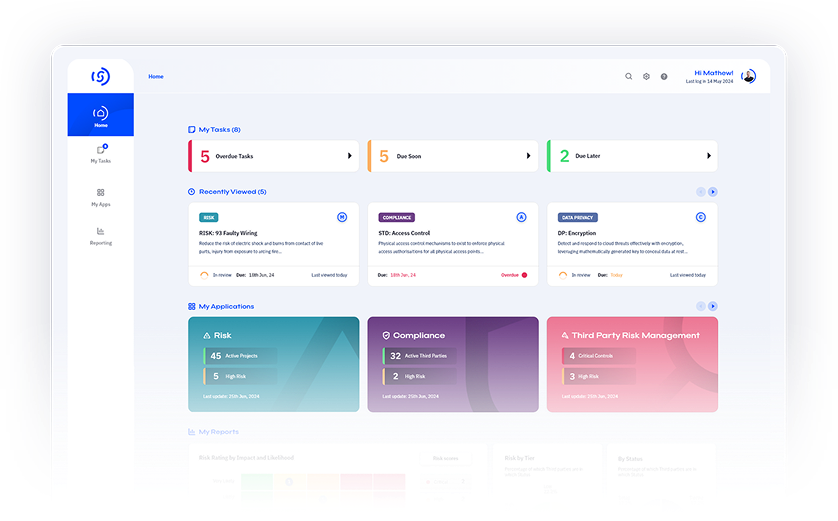
SureCloud helps organisations move beyond the traditional “audit season” mindset by enabling a continuous, technology-led approach to SOC 2. With SureCloud, teams can:
-
Connect key systems for automated evidence collection
-
Monitor controls continuously across identity, cloud, HR and engineering
-
Map evidence across multiple frameworks to avoid duplication
-
Track control performance in real time
-
Automate workflows for approvals, remediation and reviews
-
Maintain a single source of truth for audits
This approach reduces friction, improves reliability and supports a year-round compliance posture.
Why a Continuous Approach Is Now the New Normal
SOC 2 compliance in 2026 is no longer just a certification exercise. It is a signal of operational maturity and a requirement for building trust with customers, partners and regulators. The organisations that thrive are those that move away from manual, point-in-time methods and towards a continuous, automated model.
By adopting a modern approach and leveraging platforms like SureCloud, teams can reduce audit fatigue, respond faster to risk and maintain confidence in their compliance posture every day of the year.
Found this useful?
Choose SureCloud as a preferred source in Google and you will see more of our GRC guidance in Top Stories, AI Overviews and AI Mode. It takes one click and you can undo it at any time.
Let Gracie get the work done.
Gracie drafts summaries, evidence requests and audit narratives across your programme — you stay in control.
See Gracie in action or book a full platform demo →See what SureCloud costs
A short form, no sales call. Pricing built around your GRC estate.
Get PricingIDC names SureCloud the industry's first cross-domain agentic GRC platform
Read the independent analyst view on how SureCloud is redefining risk and compliance.
Download for free.webp)
“In SureCloud, we’re delighted to have a partner that shares in our values and vision.”

Read more on how Mollie achieved a data-driven approach to risk and compliance with SureCloud.
“In SureCloud, we’re delighted to have a partner that shares in our values and vision.”
Read more on how Mollie achieved a data-driven approach to risk and compliance with SureCloud.
“In SureCloud, we’re delighted to have a partner that shares in our values and vision.”
Read more on how Mollie achieved a data-driven approach to risk and compliance with SureCloud.